Beyond the Brief
 July 19, 2026
5 min read
July 19, 2026
5 min read
A while ago, after we had wrapped up a particularly demanding conversation, a senior leader said something that has stayed with me ever since.
“You guys are not our agency. You are part of the team.”
It wasn’t said as praise, nor was it intended as a memorable quote. It was simply how they had come to see us. But the more I have reflected on those words, the more I have realised they capture something fundamental about the relationships that produce the best work.
Over the years, we’ve had the privilege of working with organisations across sectors, helping them navigate moments of growth, uncertainty and change. Every engagement has been different, but when I look back at the work that created the greatest value, one pattern consistently emerges. The partnerships that brought out the best in us had one thing in common. We never felt like an external agency. We felt responsible for the outcome.
That sense of responsibility didn’t come from the contract we had signed or the scope of work we had agreed to. It came from the way we were included in the relationship. We were invited into conversations early, often before the challenge had even been defined. We understood the business context, the competing priorities, the constraints and the difficult decisions that needed navigation. That context allowed us to contribute beyond the brief. Instead of focusing only on what needed to be done, we could help think through why it mattered and how the organisation could move forward with greater clarity.
I’ve often wondered why some professional relationships naturally evolve into genuine partnerships while others remain purely transactional. Experience has taught me that the difference rarely lies in capability. Most organisations work with capable advisers, consultants and agencies. The real difference lies in whether they are trusted with context and encouraged to exercise judgement.
That’s why I believe context is one of the most overlooked forms of trust. When we give people only a task, they focus on completing the task. When we help them understand the larger purpose, they begin thinking about the outcome. The question changes from “What do you need us to deliver?” to “What is the right thing to do?” That shift may sound subtle, but it changes the quality of the conversation entirely.
Many organisations say they are looking for strategic partners. I sometimes wonder whether a better question is whether they create the conditions for partnership to exist. Partnership isn’t something that appears because a proposal describes it that way or because a retainer has been signed. It develops through everyday interactions. It grows when people are trusted with enough context to make meaningful contributions. It deepens when different perspectives are welcomed rather than merely tolerated. Over time, people stop thinking about protecting the boundaries of their role and start thinking about protecting the interests of the organisation.
The opposite is equally true. When every recommendation is treated with suspicion, every decision requires repeated validation and every interaction is reduced to instructions, even the most talented professionals eventually become order takers. Not because they lack ideas, but because the relationship has quietly taught them that independent judgement is not particularly valued. The opportunity cost is significant. Organisations don’t just lose creativity; they lose perspective, curiosity and the benefit of people who are genuinely invested in helping them be better.
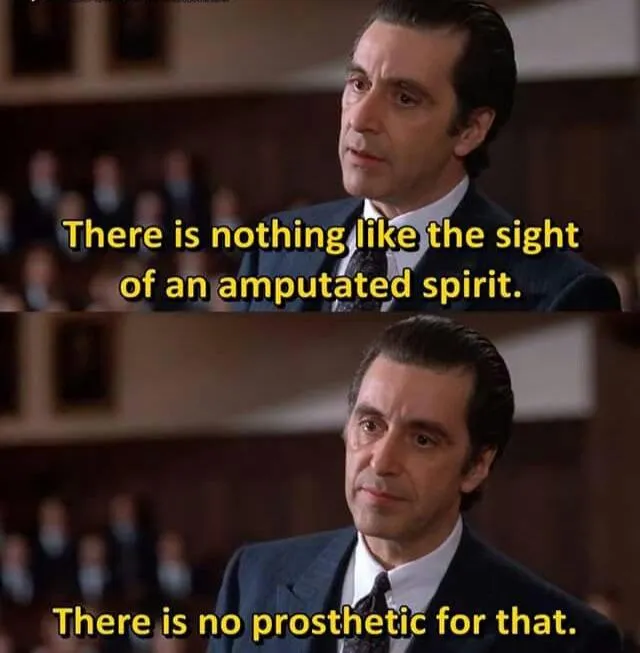
The greatest loss isn’t just capability. It’s spirit. As Al Pacino famously said in Scent of a Woman, “There’s no prosthetic for that.” I’ve always thought that line applies far beyond the film. When someone’s professional spirit is repeatedly ignored, questioned or confined, it doesn’t disappear overnight. It slowly withdraws. Once people stop believing their judgement matters, they stop offering it. Getting compliance is easy after that. Getting commitment is much harder.
What has become increasingly clear to me is that these principles extend far beyond agency relationships. It is equally relevant to leadership. The strongest leaders I have worked with were never interested in creating teams that depended on them for every decision. They invested time in helping people understand the purpose behind the work, shared context generously and trusted them to contribute their judgement. They challenged ideas, certainly, but they didn’t discourage independent thinking. As a result, people took ownership not because they were instructed to do so, but because they genuinely cared about the outcome.
RF Thunder team has been fortunate to experience this firsthand. The organisations that trusted us in this way consistently brought out the best in our team. We asked better questions because we understood the business more deeply. We offered more thoughtful advice because we appreciated the wider context. We challenged assumptions when we believed there was a better path forward, and those conversations were possible because trust already existed. We were never trying to win an argument. We were trying to arrive at the best decision together.
Looking back, I don’t think the leader who made that remark was commenting on the quality of our work. They were describing the nature of the relationship we had built together. Somewhere along the way, we had moved beyond a traditional agency-client dynamic. We had become people who shared a commitment to the same outcome.
That, perhaps, is one of the highest compliments any professional services firm can receive. Not because it blurs organisational boundaries, but because it reflects something much more meaningful. Trust had changed how we worked together. We were no longer measured simply by what we delivered. We were trusted for how we thought, the questions we asked and more importantly, the judgement we brought to the table.
The best partnerships are rarely built beyond the brief because someone decides they should be. They emerge when people are given the context, the trust and the confidence to care about the outcome as much as everyone else around the table. When that happens, something shifts. In my experience, that’s where the magic begins.
